Following his Quaker beliefs, William Penn promoted the idea that the Native Americans should not be treated as “savages” to be feared but rightful citizens of the New World who could expect payment in exchange for a quitclaim to vacate their territory. “They shall have liberty,” claimed Penn, “to do all things… that any planter [settler] shall enjoy.”
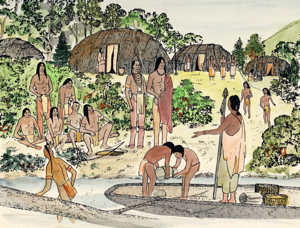
Illustration by John Kraft
The Native Americans…were a peaceful, woodland clan with no fixed home.
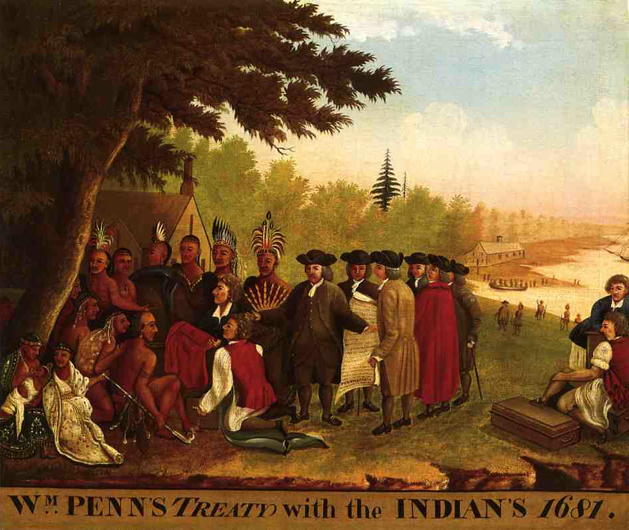
Penn’s Treaty with the Indians by Pennsylvania born artist Edward Hicks, National Gallary of Art.
The Native Americans Penn first encountered – the Delaware or Lenni Lenape – were a peaceful, woodland clan with no fixed home. The local tribe known as the “Turtle” clan stayed seasonally at Northbrook, often sweeping through the lands of Richard “The Forks” Woodward and Abraham Marshall. Their frequent travels as well as the grooming of the forest floor for kindling made the environs almost park-like and, consequently, easily farmed. Moreover, the network of long established Indian trails created ready-made roads for the colonists.
Penn’s 1685 treaty with the Northbrook Lenapes and other clans promised they could keep their ancestral grounds along the Brandywine River. The terms seemed favorable, but in reality the Lenapes gave up a vast territory in exchange for a narrow tract that extended one mile on either side of the Brandywine River.
By 1725, the treaty had been lost in a fire and the Northbrook reserved lands were sold surreptitiously. The Lenape at Northbrook were forced to abandon their territory and escape further west to Lancaster. Part of the Lenape tribe was said to have joined the Cherokees on the forced 900-mile 1838 march infamously known as the “Trail of Tears.”
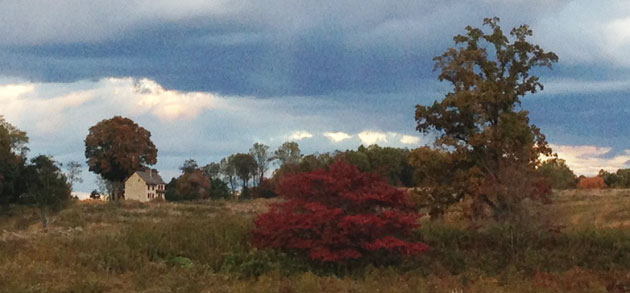
Webb house.
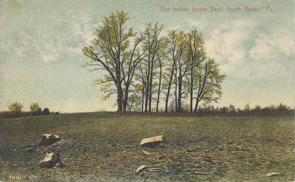
Northbrook burial. Postcard courtesy of the family of the late Bill & Florence Supplee.
Decades later, a woman, known as “Indian Hannah,” was thought by locals to be the “last of the Lenapes.” She was allowed to move from farm to farm according to a written agreement signed by 30 descendants of Marshall and his Quaker neighbors.