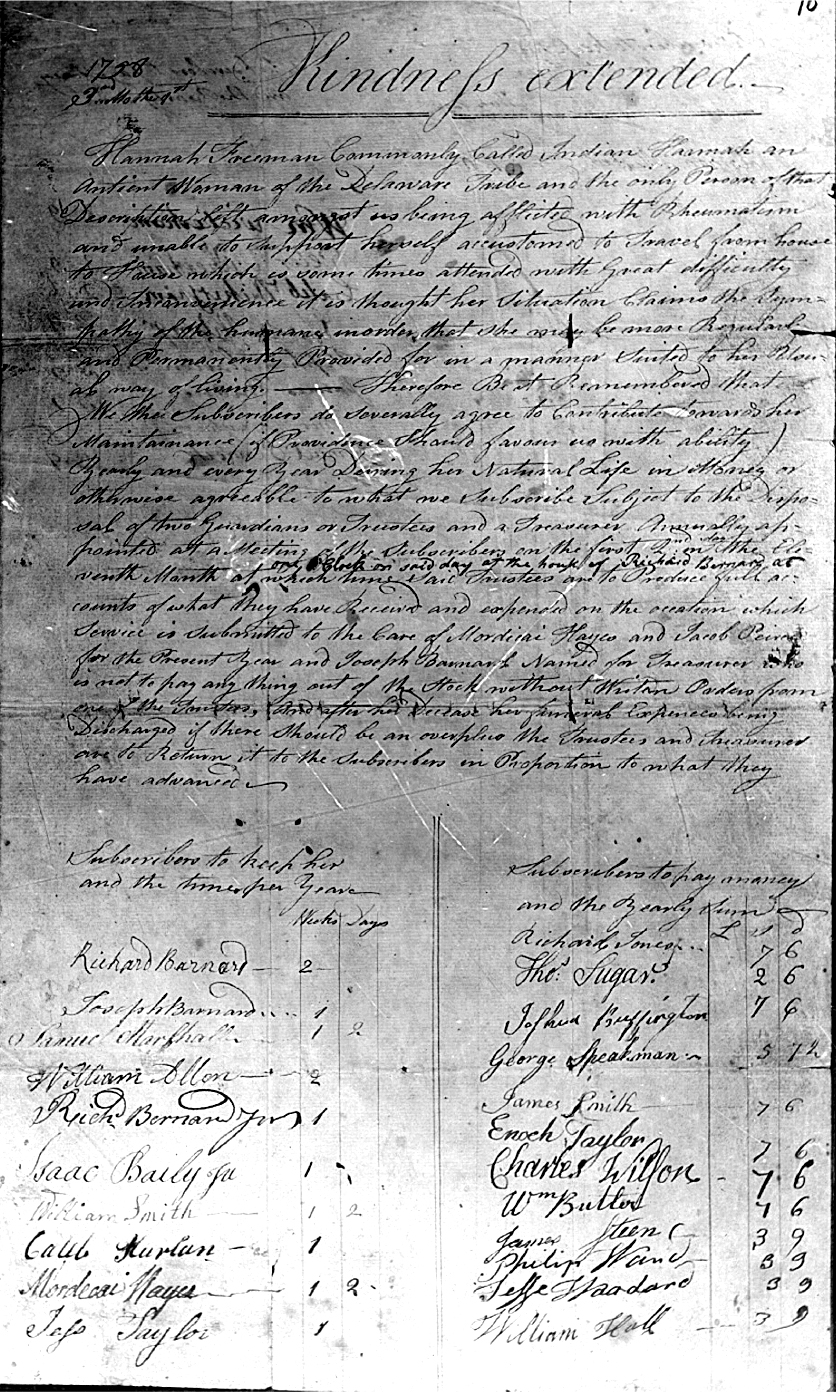
In 1798 the West Bradford Quakers drew up an agreement for the care of “Hannah Freeman, commonly known as Indian Hannah.” For years Hannah had lived near the Humphry Marshall homestead, but the Quakers were now concerned about her primitive lifestyle, living in a dirt floor cabin shared by a tethered cow and a pack of dogs. Hannah survived by crafting baskets and brooms from willow switches, hickory bark and oak straw to sell at the West Chester market.
Hannah survived by crafting baskets and brooms from willow switches, hickory bark and oak straw to sell at the West Chester market.

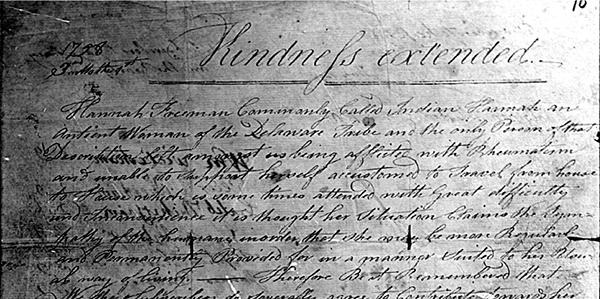
View the full Indian Hannah contract. Image courtesy of the Chester County Historical Society.
It wasn’t until 1909 that a nearby marker honoring her memory was dedicated. John Russell Hayes, a Quaker teacher and poet, wrote the epithet: “Here rests Indian Hannah, the last of the Lenni-Lenape Indians in Chester County who died in 1802.” The Newlin Historical Commission placed a new marker for Indian Hannah in Embreeville in 2009.
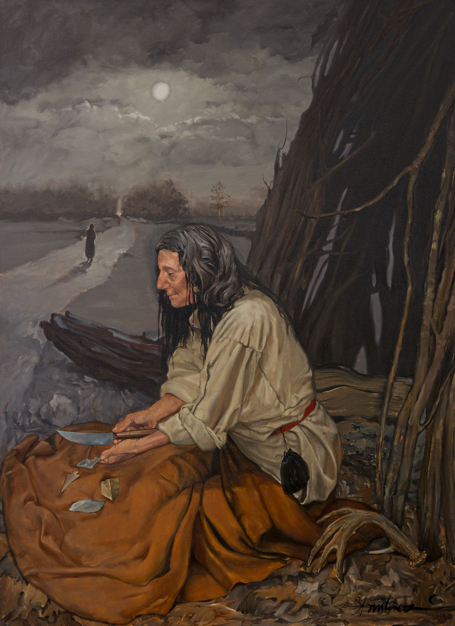
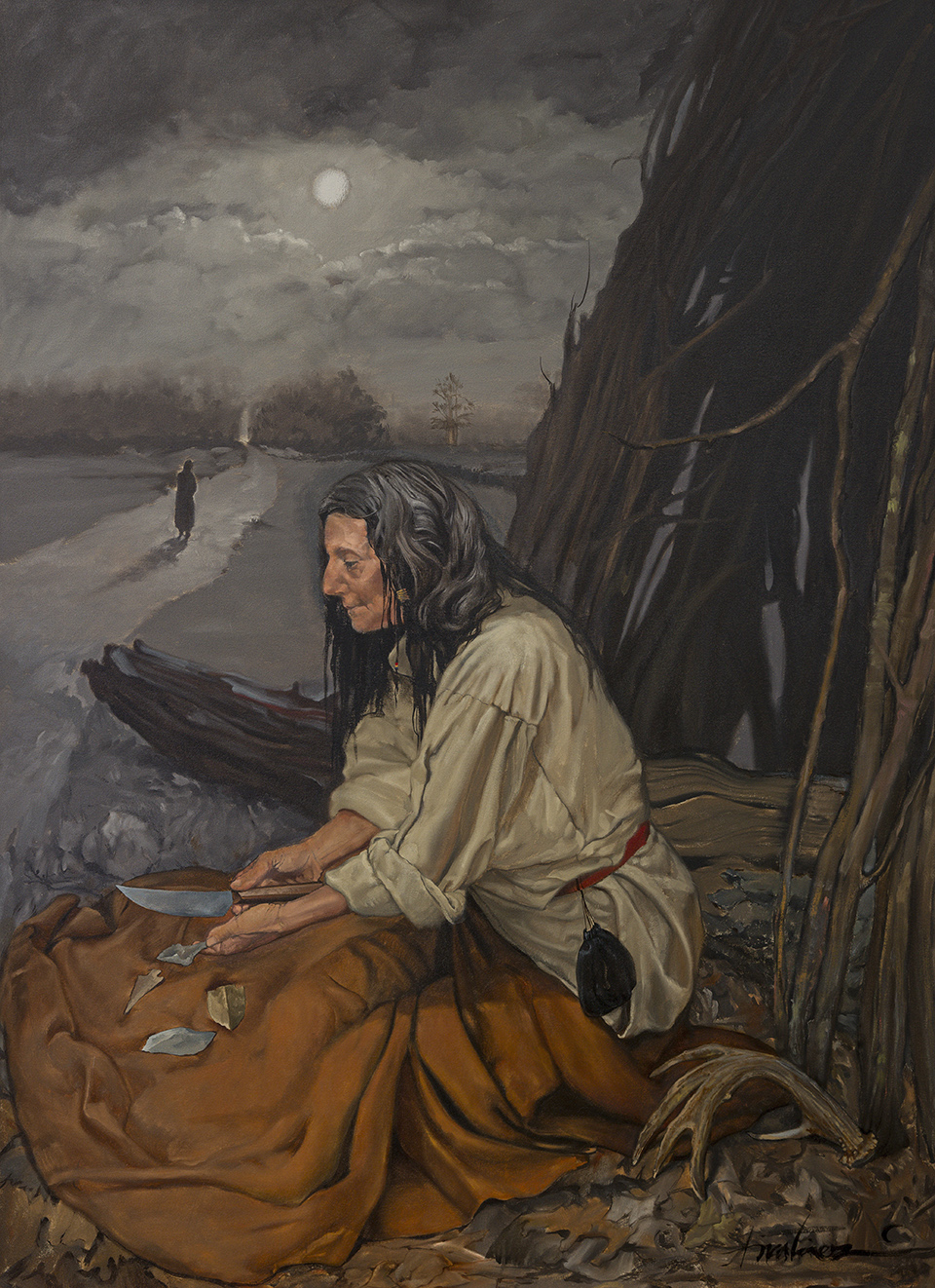
Portrait of Hannah Freeman by Adrian Martinez.
The agreement declared that since Hannah was the “only one” left of her tribe and “accustomed to travel,” the signers should take turns hosting her at their farms. Those who declined were asked to pay a yearly sum of several “shillings” for her care. When the County Poorhouse opened in 1800, Hannah and “Black Phyllis” were listed as the only non-white “inmates.” Hannah died in 1802, a year after her friend Humphry Marshall’s death, and was buried with no headstone in the poorhouse burial grounds, the first one to die there.
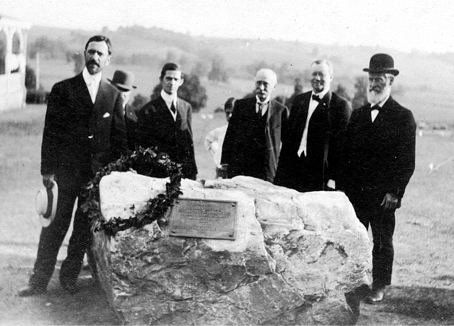
A monument was dedicated to Indian Hannah in 1925. Photo courtesy of the Chester County Historical Society.