THE BRITISH FORCES:
34
DAYS AT SEA
260
SHIPS
18,000
MEN
Washington prepared to defend Philadelphia from the advancing British army by positioning his troops at Chadds Ford, where the road towards Philadelphia crossed the Brandywine River. American troops were stationed at all known ford crossings along the main branch of the Brandywine. West Bradford, above the Fork, was considered too far north to be at risk and its residents felt safe.
In late August 1777, a Royal Navy fleet of 260 ships ferried General Howe and his 18,000 Crown Forces through the top of the Chesapeake Bay to a landing at Elk Head (today’s Elkton, MD). After 34 days at sea and a difficult disembarkment in the shallow, muddy Elk River, the British immediately started their march up the Great Road (now Route 1) towards Philadelphia, the America’s capital and largest city. A swift victory in the capital over the untested Colonial Army would quickly suppress the Rebellion.
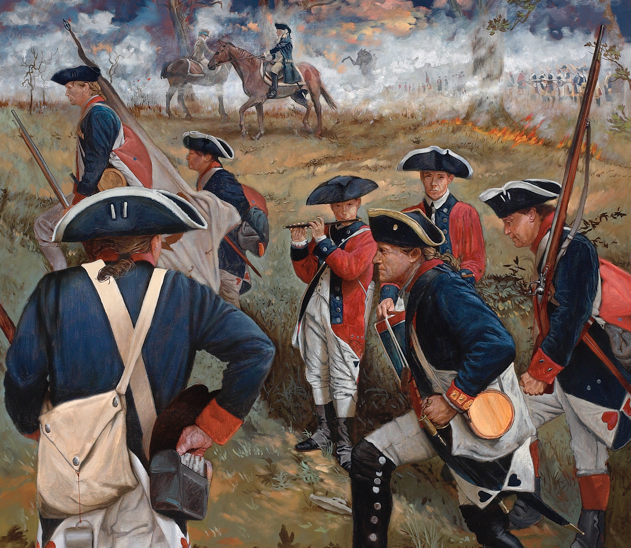
Battle of Brandywine by Adrian Martinez
West Bradford, above the Fork, was considered too far north to be at risk and its residents felt safe.

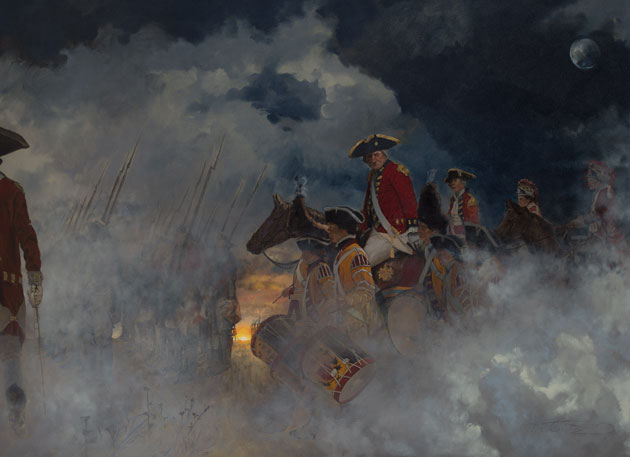
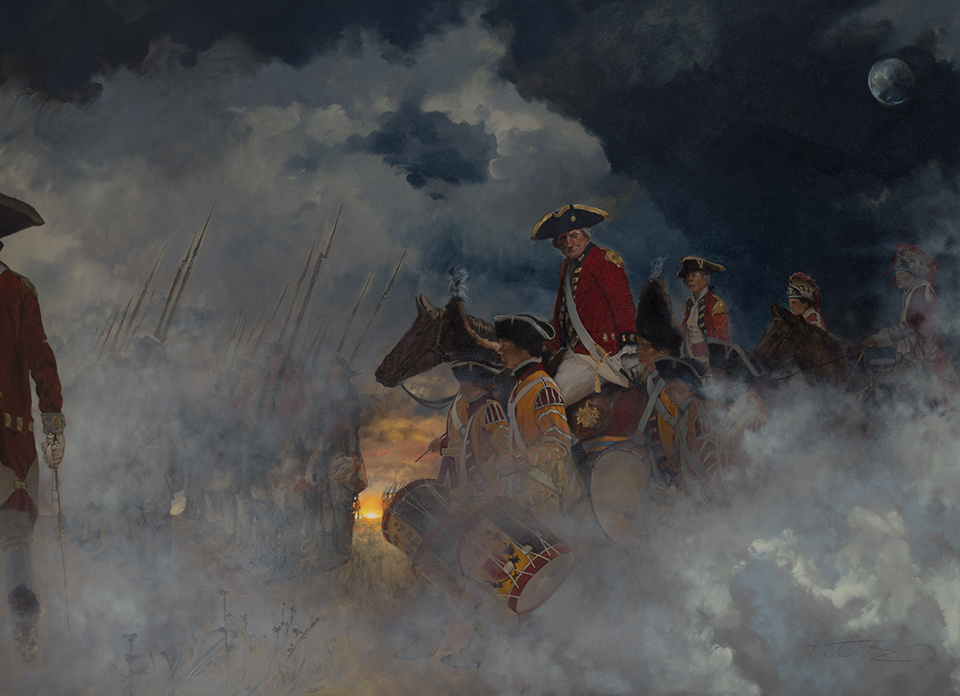
Cornwallis at Dawn by Adrian Martinez.

Watch this video to learn about flanking maneuver used by British forces to attack American troops. Video provided by Chester County Planning Commission.
At 5:00 am on September 11, 1777, under cover of heavy fog, General Cornwallis and General Howe detach 9,000 British Crown forces from the rest of the army and begin their flanking movement towards Trimble’s Ford. Shortly thereafter, almost 6,000 German Hessians under General Knyphausen were ordered to march to Chadds Ford and “amuse” the Americans with a diversionary tactic that fooled Washington into believing he was engaging the full thrust of the British Army across the Brandywine.
Charles Cornwallis, 1st Marquess Cornwallis. by Thomas Gainsborough, National Portrait Gallery, London
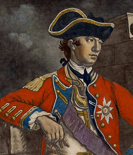
William Howe, 5th Viscount Howe. By Richard Purcell