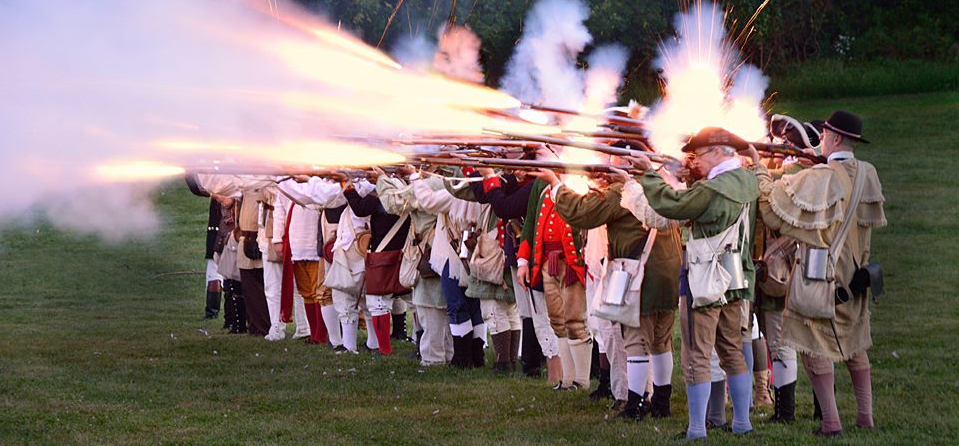
Battle of Brandywine reenactment photograph courtesy of Fred Weyman.
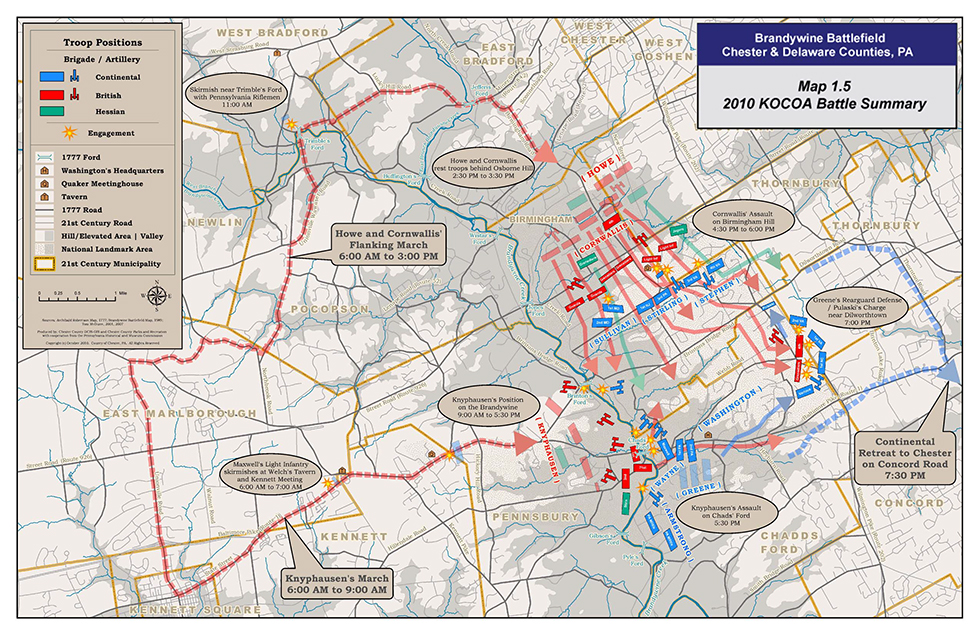
Two of three American divisions repositioned towards the right flank bravely faced Howe’s onslaught from the north, but ultimately gave ground. American artillery lead by General Knox helped delay the British advance. Washington repositioned fresh reserves from the center to engage the British and allow the rest of the army to retreat to Chester, PA as night fell. The British, also impacted by heavy casualties, were unable or unwilling to pursue in the darkness.

View fullscreen overall troop map.
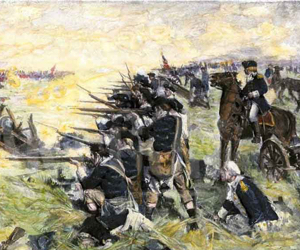
American casualties – dead, wounded and captured – numbered about 1300, more than double that of the British.
The defeat and hasty retreat were costly. American casualties – dead, wounded and captured – numbered about 1300, more than double that of the British. 11 of 14 artillery pieces had been left on the field for the Redcoats. The stinging defeat left Washington with the need to upgrade his young, unproven American army. They had been beaten but not crushed by the best army in the world, and they would carry on to fight another day.
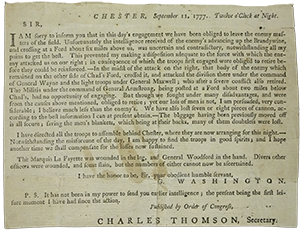
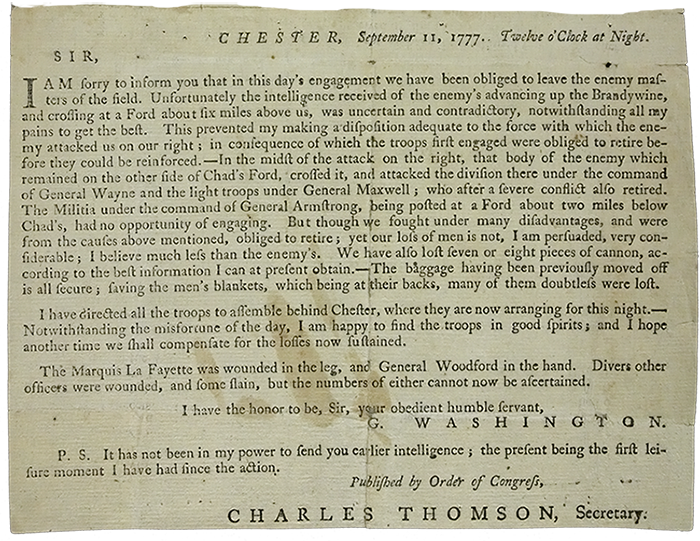
View full letter from General Washington on his retreat.
The Battle of the Brandywine was the bloodiest and largest single-day land battle in the War for American Independence. Although it ended in victory for the British, the battle is now considered the turning point of the American Revolution since it led General Washington to insist on more funding, better preparations and improved training.
The Americans had no choice but to abandon Philadelphia to the Redcoats and move the Continental Congress to safer ground west: first to Lancaster, and then to York. In the months that followed, Washington’s army suffered setbacks and tragic loses including the Battle of Paoli, also known as the Paoli Massacre. Washington decided to winter over the army at Valley Forge, where they could keep an eye on the British 20 miles downriver in Philadelphia. He would use the winter season to regroup, reorganize and train the Continental Army for fresh fighting the next spring.
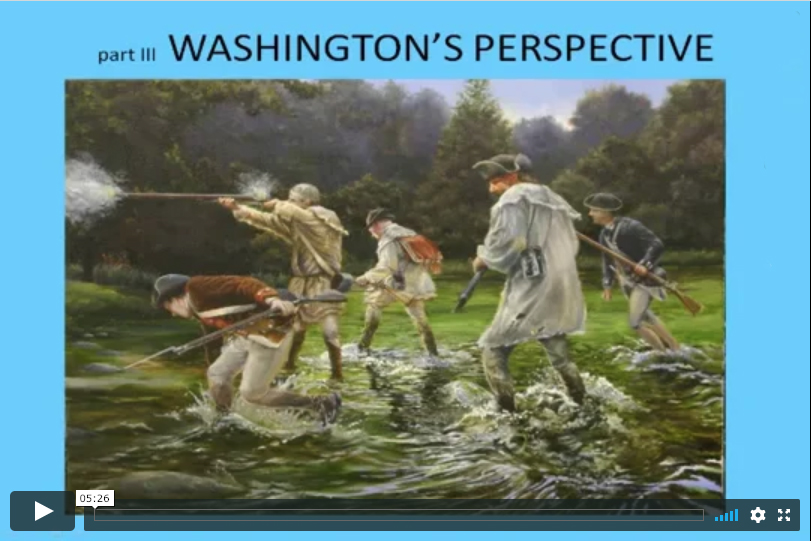
Learn how faulty intelligence contributed Washington’s defeat in this battle. Video provided by Chester County Planning Commission.