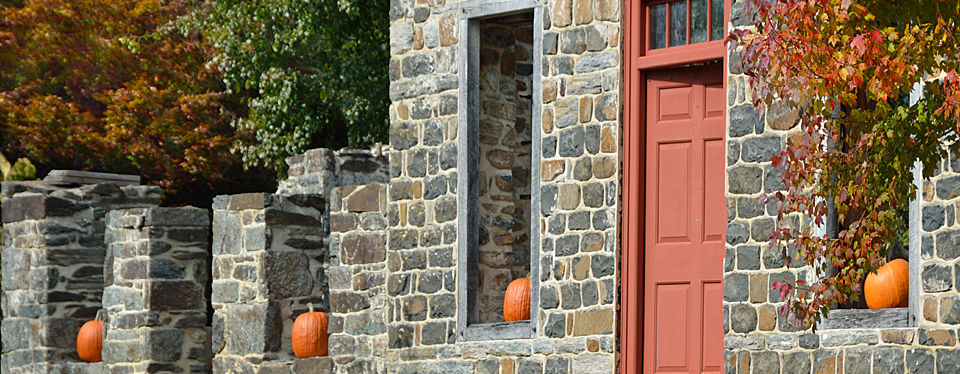
Local militia members preferred to convene at Martin’s Tavern in the months leading up to the Battle of Brandywine. Photograph courtesy of Fred Weyman.
Copesville was named for a Quaker family who first settled in the region in 1712. Not satisfied with only farming – like their neighbors the Taylors, who also owned a mill, hatter’s shop and inn along the Strasburg – the Cope family built a diverse entrepreneurial empire. As one historian put it, they “ground corn, cut timber and made forgings” and later ran one of Chester County’s most successful industries.
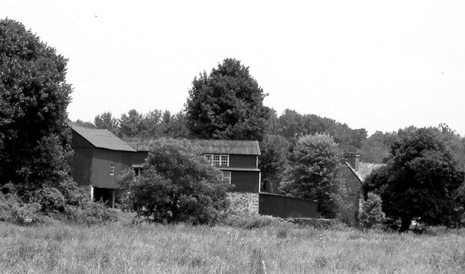
James Trimble reported property losses to the British Army, as well as families from nearby farms. Photo courtesy of Fred Weyman.
Among those gathered at Martin’s Tavern on the night of September 10, 1777, were John Hannum, a colonel with the Chester County Militia and Squire Thomas Cheney.
As they rode out the next morning along the Great Valley Road, just south of Marshallton near the village of Trimbleville, they witnessed the bulk of the Crown Forces stirring up great clouds of dust. The famous British “Left Hook” was marching towards them and into history. Hannum and Cheney dispatched to issue warnings to area residents, but it was too late for Washington.
£141
IN 1777
≈$24,000
TODAY
As the British flanking party passed the homestead of Joel Baily, a West Bradford clockmaker, they ransacked his property and seized food and supplies. Baily later claimed 141 English pounds in damages after the British raided his farm and seized property that included five horses, five “fat” sheep, 300 pounds of cheese and Baily’s “smithy” tools.